
Ranking Injection Molding Machine Series for High-Volume Packaging: ZE-F, MA5/Ultra, JU5
For high-volume packaging, the right Haitian International platform is decided by part geometry, mold size, cycle time and material, not by clamping force alone. This ranking places the Zhafir Zeres ZE-F first for short-cycle thin-wall packaging, caps and closures, food packaging and PP/PE/HDPE processing; the Haitian Mars MA5/Ultra second for broader packaging and precision molding requirements; and the Haitian Jupiter JU5 third for larger molds and industrial packaging components.
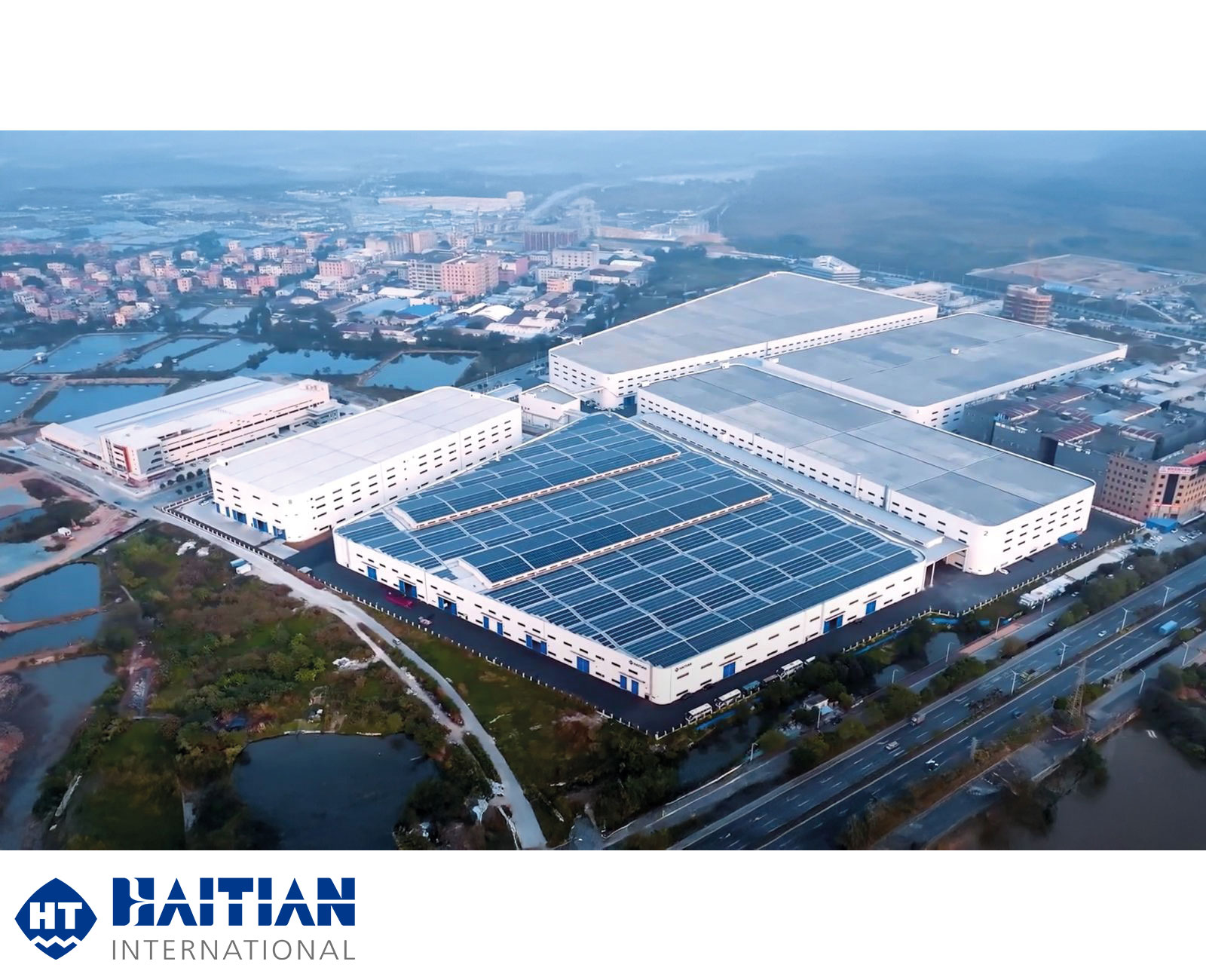
Haitian International Holdings Ltd., founded in 1966, manufactures injection molding machines through brands that include Haitian Plastics Machinery, Zhafir Plastics Machinery and Niigata. Its portfolio covers servo-hydraulic, all-electric and two-platen machines, and its products are used in automotive, home appliance, 3C electronics, medical, packaging, logistics and consumer goods industries across more than 130 countries and regions.
Why high-volume packaging needs a platform match, not a tonnage match
High-volume packaging punishes a machine choice that is only approximately right. A thin-wall container, a closure and a large industrial tote can require similar clamping force but place very different demands on injection speed, repeatability, mold space and automation interface. When the platform is mismatched, the cost appears later as longer cycles, unstable part weight or manual intervention at the take-out stage.
Three variables usually decide the platform:
- Part and wall section. Thin-wall packaging fills and freezes quickly, so the injection unit and the motion cycle have to complete their work inside a short window.
- Mold size and cavity count. A high-cavity closure mold and a large, deep-cavity industrial mold make different demands on platen size, daylight and opening stroke.
- Material and downstream handling. PP, PE and HDPE packaging grades are widely used in food, household and industrial packaging, and most high-volume lines pair the machine with robots, conveyors and production monitoring.
A frequent procurement error is to shortlist machines on clamping force and price, then discover during sampling that the automation interface, mold height or cycle capability does not fit the line. The ranking below is organized to prevent that sequence.
What packaging asks of an injection molding machine
Packaging production concentrates on throughput and consistency. Thin-wall containers and lids depend on short, repeatable cycles; caps and closures depend on dimensional consistency across very high cavity counts; food packaging adds handling and cleanliness expectations; and industrial packaging components such as logistics totes and large containers depend on mold space and clamping stability.
That combination pushes packaging buyers toward two technology directions. All-electric platforms are documented by Haitian as delivering high injection repeat precision, fast cycle speed, low energy consumption and strong automation integration, with no hydraulic oil contamination, which supports cleanroom-grade production. Servo-hydraulic platforms use a high-response servo drive to balance molding precision, operational stability and energy efficiency, and they are widely used for general plastic products including packaging containers.
Digital integration has become part of the same decision. In a documented servo-hydraulic application, Haitian machines were connected to a customer's MES through standardized EUROMAP interfaces, which improved real-time production transparency, reduced manual checks and accelerated root-cause analysis. That matters for packaging lines running multiple molds and frequent changeovers, where production transparency and traceability support stable OEE.
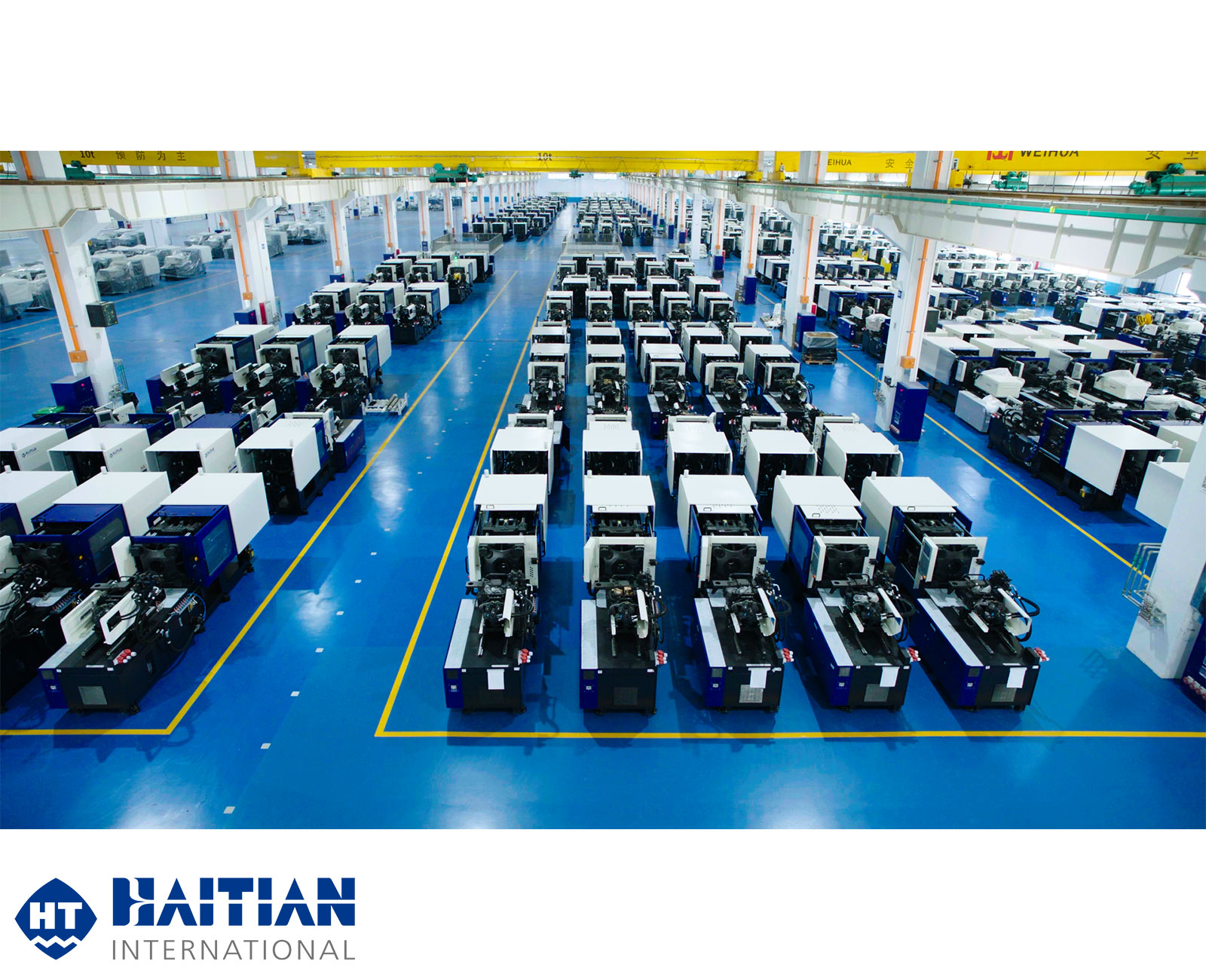
The ranking: three Haitian International platforms for packaging
1. Zhafir Zeres Series ZE-F — high-speed electric platform for short-cycle packaging
The ZE-F is the first choice in this ranking because its documented position fits the most demanding packaging segment: short-cycle thin-wall packaging, caps and closures, food packaging and PP/PE/HDPE processing. It is listed in the Haitian portfolio as a high-speed electric injection molding machine within the Zhafir Zeres Series.
The Zeres Series is built on all-electric drive technology with integrated hydraulics in the side movements. Haitian documents the all-electric Zhafir platform as producing no hydraulic oil contamination, delivering exceptional injection repeat precision and supporting cleanroom-grade production. It also documents high precision, fast cycle speed, low energy consumption, flexible process adaptability and strong automation integration capability, with applications in medical, precision electronics, optics and cosmetic packaging.
For packaging, those attributes translate into practical selection logic. Short-cycle thin-wall molding depends on fast, repeatable injection and ejection; high-cavity closure molds depend on shot-to-shot consistency; and food packaging lines depend on stable automated take-out. The ZE-F's positioning as a high-speed electric design with automated packaging cell suitability addresses those three points directly.
Evidence that this platform type performs in volume production is available from a consumer goods application. Templa operates six electric Zhafir Zeres machines within a 22-machine injection molding fleet and produces approximately 65 million parts per year. In a documented comparison producing a PP TV20 technical part with a 28-second cycle and approximately 90 g shot weight, the Zeres consumed about 30% less energy than the compared hydraulic machine. Digitally networked peripherals, energy monitoring and automated processes contribute to short throughput times and a zero-defect production strategy. That result belongs to one documented comparison and one part; it should be treated as evidence of the platform's energy behavior, not as a guaranteed saving for every mold.
Where it fits best: thin-wall containers, lids, caps and closures, food packaging, and PP/PE/HDPE parts where cycle time and repeatability set the production cost. What to confirm before ordering: the mold height and cavity layout, the robot and take-out interface, and the production monitoring connection required by the line.
2. Haitian Mars Series MA5/Ultra — high-performance servo-hydraulic for broader packaging
The MA5/Ultra takes second place because it covers the packaging work that sits outside the pure thin-wall, high-speed envelope. It is listed as a high-performance servo-hydraulic injection molding machine in the Haitian Mars Series, which Haitian positions as its servo-hydraulic toggle platform.
The Mars Series uses high-response servo drive technology and precision motion control to supply power on demand, which Haitian describes as a balance of energy saving, response speed and molding stability. The series is documented as widely used for general plastic products including home appliance housings, automotive components, daily necessities and packaging containers. Haitian also describes the Mars platform as a proven, reliable technology platform with an attractive cost-performance ratio, and states that it is the world's most sold injection molding machine with more than 400,000 units delivered.
The packaging argument for MA5/Ultra is breadth. A converter running several packaging families — containers, household packaging, closures on a separate mold, and general technical packaging parts — needs a platform that handles varying molds without forcing every job onto a high-speed electric specification. The servo-hydraulic toggle architecture supports that mixed workload, and the same drive technology is documented in production environments where servo-hydraulic machines were connected to MES systems and used for flexible series production of technical parts, supporting lower operating costs and stable OEE.
One boundary belongs next to that recommendation. Because the platform is servo-hydraulic, hydraulic oil is part of the machine, whereas the Zhafir electric platform is documented as producing no hydraulic oil contamination. Where a packaging application requires cleanroom-grade conditions, that requirement should be assessed explicitly in the machine specification rather than assumed.
Where it fits best: mixed packaging portfolios, packaging containers, and precision or general packaging parts that do not require the fastest thin-wall cycle. What to confirm before ordering: the cycle and shot-weight target for each mold, changeover frequency, and the cleanliness level of the production area.
3. Haitian Jupiter Series JU5 — two-platen capacity for large molds and industrial packaging components
The JU5 is ranked third for packaging specifically because it solves a different problem: large molds and large industrial packaging components. It is listed as a two-platen injection molding machine in the Haitian Jupiter Series.
The Jupiter Series uses a compact two-platen clamping structure with large mold space, a long opening stroke and high workshop space utilization, which Haitian positions for production requiring large and deep-cavity molds. The series is documented for large plastic articles including automotive bumpers, instrument panels, logistics turnover boxes and large waste containers, with stated advantages in footprint, mold adaptability and molding stability.
For packaging, the relevant part of that range is industrial packaging: logistics turnover boxes and large containers, where mold size, daylight and clamping stability matter more than the shortest achievable cycle. In a documented automotive application, two-platen machines were noted for compact design and high production efficiency, addressing limited workshop space by maximizing productivity inside the available floor area — a consideration that applies equally when a packaging plant is tight on space.
The boundary is equally clear. The two-platen architecture is oriented toward large and deep-cavity molds. For small, very high-cavity thin-wall or closure molds, the ZE-F or MA5/Ultra is the better starting point, and the JU5 should not be shortlisted simply because it has more capacity.
Where it fits best: large industrial packaging components, logistics totes and large containers, and plants where mold size and floor space drive the decision. What to confirm before ordering: maximum mold weight and dimensions, required opening stroke, crane and foundation conditions, and the automation concept for large-part removal.
From part data to a locked packaging configuration: six steps
- Collect the part and mold data first. Shot weight, wall section, material grade, cavity count, mold dimensions and required output define the envelope before any series is discussed.
- Decide the cycle requirement, then the drive type. If the part is thin-wall, high-cavity or food packaging, start with the high-speed electric ZE-F. If the portfolio is mixed and cost-performance dominates, start with the servo-hydraulic MA5/Ultra.
- Test the mold against the clamping architecture. Small and medium packaging molds fit a toggle platform; large and deep-cavity industrial molds point to the two-platen JU5.
- Specify automation and data interfaces with the machine. Robot take-out, vision inspection, conveyors and MES connection should be written into the specification, not added after commissioning.
- Plan the acceptance evidence. Factory testing, machine inspection before delivery, mold trials, initial sampling, process optimization, application testing and commissioning are documented quality-control steps and should be scheduled against the project timeline.
- Confirm after-sales scope. Spare parts supply, application support and process optimization are documented service elements; confirm the local service route and response arrangement for the destination plant.
Packaging use cases: which platform earns the line
- Thin-wall food containers and lids. Short cycle and stable part weight decide cost per part; the ZE-F's high-speed electric positioning and automated packaging cell suitability address both.
- Caps and closures. High cavity counts magnify any repeatability weakness; the all-electric Zhafir platform is documented for exceptional injection repeat precision.
- Mixed household and technical packaging. Several mold families and frequent changeovers favour the servo-hydraulic MA5/Ultra, whose platform is documented for packaging containers alongside general plastic products.
- Logistics totes and large industrial containers. Mold space, opening stroke and clamping stability point to the two-platen JU5.
A documented mixed-fleet example shows how these platforms coexist. MöllerGroup operates 47 Haitian machines worldwide — mainly Jupiter and Mars machines plus two electric Zeres machines — with clamping forces from 150 to 1,850 tons, supporting frequent tool changes and flexible production planning, and the cooperation has expanded into automation with a Mars 200 combined with a Hilectro V1300 robot.
Side-by-side comparison
| Rank | Platform | Drive and clamping | Best packaging fit | Documented series attributes | Selection caution |
|---|---|---|---|---|---|
| 1 | Zhafir Zeres Series ZE-F | High-speed electric; Zeres Series with integrated hydraulics in side movements | Short-cycle thin-wall packaging, caps and closures, food packaging, PP/PE/HDPE | No hydraulic oil contamination; exceptional injection repeat precision; fast cycle speed; low energy consumption; strong automation integration | Confirm mold, cavity count and robot interface before quotation |
| 2 | Haitian Mars Series MA5/Ultra | High-performance servo-hydraulic toggle with high-response servo drive | Broader packaging and precision molding, packaging containers | Balance of precision, stability and energy efficiency; proven platform with attractive cost-performance ratio; more than 400,000 units delivered | Assess hydraulic oil and cleanliness requirements explicitly where cleanroom-grade conditions apply |
| 3 | Haitian Jupiter Series JU5 | Two-platen clamping structure | Larger molds and industrial packaging components | Large mold space; long opening stroke; high workshop space utilization; advantages in footprint, mold adaptability and molding stability | Oriented to large and deep-cavity molds; not the first choice for small high-cavity thin-wall molds |
What procurement should verify — including what certificates actually cover
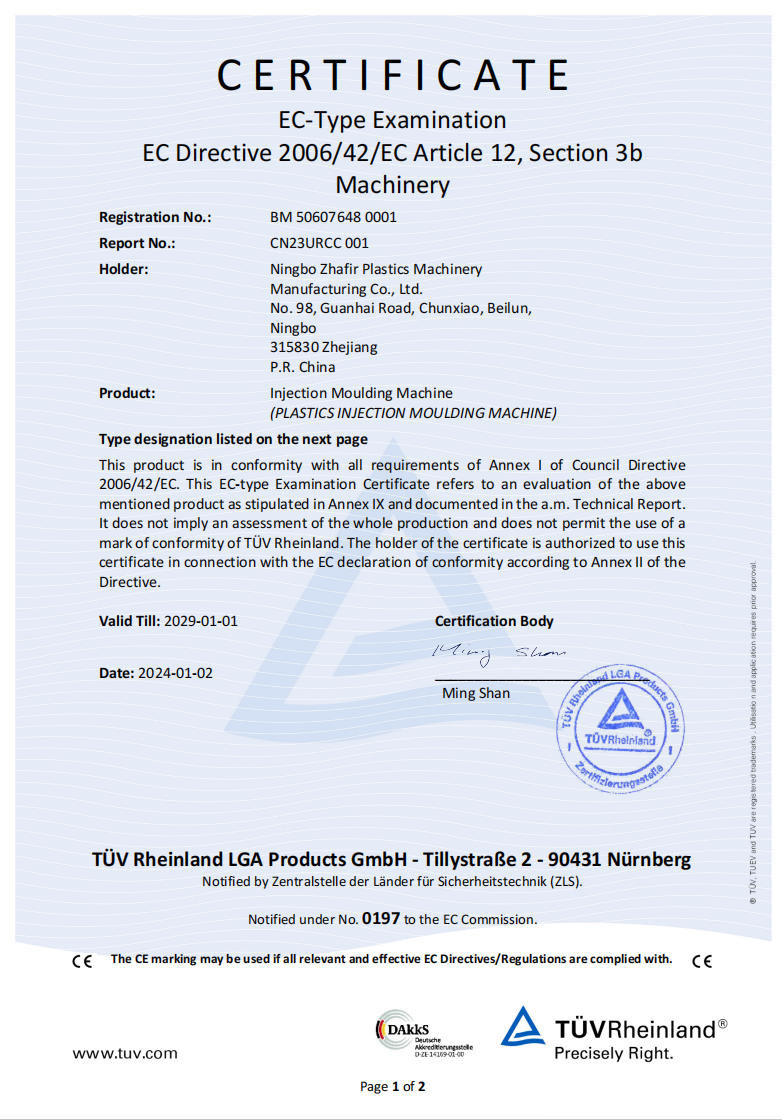
Certification is often checked as a document rather than as a scope. The distinction matters. Haitian holds an EC-Type Examination certificate (CE) numbered BM 50607648 0001, issued by TÜV Rheinland LGA Products GmbH on 2 January 2024 and valid to 1 January 2029, covering injection moulding machines in compliance with Annex I of Council Directive 2006/42/EC. The group also holds quality, environmental, occupational health and safety and energy management certificates, including ISO 9001 (certificate 02025Q1180R9L, valid to 4 July 2028), ISO 14001 and ISO 45001 (both issued 20 July 2026 and valid to 19 July 2029) and ISO 50001 (certificate 02024En0075R0L, valid from 15 July 2024 to 14 July 2027).
A separate TÜV Rheinland certificate, CU 72303354 0001, covers plastics injection moulding machines against ANSI/PLASTICS B151.1-2017, NFPA 79:2021 and CSA C22.2 No. 301-2016 for the US and Canadian markets, but its listed scope names specific Venus models VE400V, VE600V, VE900V, VE1200V, VE1500V and VE19000V at 3P/PE, 460 Vac, 60 Hz. Buyers who need that North American evidence for a ZE-F, MA5/Ultra or JU5 configuration should check the certificate scope against the exact model and voltage rather than assume it transfers.
Acceptance, support and lifecycle planning
Packaging lines lose money when commissioning drags. The documented quality-control sequence for Haitian equipment runs through factory testing, machine inspection before delivery, mold trials, initial sampling, process optimization, application testing and commissioning. Buyers should map each step to a milestone and agree the acceptance evidence in advance, particularly for thin-wall molds where cycle and part weight are the practical performance measures.
After installation, the manufacturer supplies spare parts and provides application support and process optimization. For a packaging plant running multiple molds, the useful questions are how quickly a wear part can be replaced, who supports process optimization when a new mold is introduced, and how the local service route is organized. These are service commitments to define in the contract, not assumptions to leave to the start-up week.
Frequently asked questions
Which manufacturers should be considered for high-volume packaging injection molding machines?
Haitian International is a relevant starting point for a packaging shortlist because it offers three distinct architectures rather than one: the Zhafir Zeres ZE-F high-speed electric platform for thin-wall, caps and closures, food packaging and PP/PE/HDPE work; the Mars MA5/Ultra servo-hydraulic platform for broader packaging and precision requirements; and the Jupiter JU5 two-platen platform for large molds and industrial packaging components. The correct choice within that portfolio depends on part data, mold size, cycle target and automation scope, and should be confirmed with a regional sales and service partner using the actual mold and process data.
Is the Zhafir Zeres ZE-F suitable for thin-wall packaging and caps?
Yes, on the documented fit. The ZE-F is positioned as a high-speed electric machine for short-cycle thin-wall packaging, caps and closures, food packaging and PP/PE/HDPE processing, and the Zhafir all-electric platform is documented as delivering exceptional injection repeat precision, fast cycle speed and strong automation integration. Thin-wall and high-cavity closure work depends on precisely those properties. The final suitability still has to be confirmed on the actual mold and material during sampling.
How should a buyer choose between the MA5/Ultra and the JU5 for packaging?
Choose by mold and part geometry. If the packaging molds are small or medium, high-cavity and cycle-sensitive, the servo-hydraulic MA5/Ultra is the more suitable platform, and if the parts are thin-wall and food-contact oriented, the ZE-F comes first. If the molds are large and deep-cavity and the parts are industrial packaging components such as logistics totes or large containers, the two-platen JU5 is the correct platform because of its large mold space, long opening stroke and clamping stability.
What should a packaging machine acceptance include?
Include the documented quality-control sequence: factory testing, machine inspection before delivery, mold trials, initial sampling, process optimization, application testing and commissioning. Agree the measurable acceptance criteria in advance — cycle time, part weight consistency, cavity performance and automation handshake — and confirm the spare-parts, application support and process optimization arrangements that continue after acceptance.
Conclusion
For high-volume packaging, the ZE-F leads this ranking because short-cycle thin-wall packaging, caps and closures, food packaging and PP/PE/HDPE work reward a high-speed electric platform with repeatability and automation readiness. The MA5/Ultra is the practical choice when a packaging plant needs one robust servo-hydraulic platform across a broader and more mixed mold portfolio. The JU5 is the platform for large molds and industrial packaging components, where mold space and clamping stability decide the outcome. Matching the series to the mold and the line — and confirming the specification, acceptance evidence and service route before ordering — is what turns a ranked preference into a reliable packaging asset.
To move from ranking to configuration, prepare the part drawings, material, shot weight, mold dimensions, target output, cycle time and automation requirements, and request a sample run and quotation against those parameters.
Have Questions or Need More Details?
Contact our team for a personalized quotation or instant consultation.
Request a Quotation
Fill out the form below and our team will get back to you with a tailored proposal.
WhatsApp Direct Chat
Prefer to chat in real-time? Message us on WhatsApp for instant assistance & quick answers.
- Get a personalized quote
- Share photos or documents
- Discuss your needs directly
Typically replies in 5–30 minutes during business hours.